
Beaufort County Criminal History Checks
No single office holds every Beaufort County criminal record. Start by defining the event and the answer needed. The North Carolina eCourts Portal is the broad public route for filed criminal cases. The Beaufort County Clerk of Superior Court supplies the authoritative file, certified county name searches, and public courthouse terminals. The sheriff keeps its own incident reports and local booking records. NCSBI keeps fingerprint-indexed state criminal history, while NCDAC holds prison and community-supervision data.
Gather the full name, spelling variants, an approximate event date, and any case, OCA, or inmate number already known. A shared name is not proof of identity. Compare the county, case number, dates, and charge history before relying on a result. When identity is the main issue, a person's own fingerprint-supported NCSBI Right to Review is stronger than a name-only match.
- Choose the custodian: arresting agency for an incident report, sheriff for booking, clerk for a case, NCSBI for personal statewide CHRI, or NCDAC for state custody.
- Search eCourts by party or case number, select Beaufort County, and narrow to criminal cases or hearings where the controls allow it.
- Match results with case number, filing date, court division, and public event dates. Do not decide identity from a name alone.
- Read the underlying docket and disposition. A booking charge may differ from the charge later filed or resolved in court.
- Ask the clerk for a certified search or copy when certification matters, or use Right to Review to inspect one's own fingerprint-based state record.
Five Beaufort County Record Channels
The most useful channel depends on scope, age, and record type. eCourts locates filed cases. The clerk can certify a Beaufort County result or provide courthouse-terminal access. The sheriff app carries current local custody tools. NCSBI handles a person's own statewide fingerprint record, and NCDAC covers sentenced state offenders and public supervision data. These systems overlap, but none replaces the others.
Use this routing flow to avoid a wrong-system search: incident or arrest report → creating agency; recent local custody → sheriff app or jail phone; filed case → eCourts or clerk; certified Beaufort result → clerk; personal statewide fingerprint history → NCSBI; state prison or supervision → NCDAC.
Official Background Checks in North Carolina
The Beaufort County Clerk offers a certified name search of county court records on Form AOC-CR-314 for $25. That paid result is limited to Beaufort County. A courthouse public-access computer can search county or statewide court data without a charge to view or email results, though printing may cost and the result is not certified. The Judicial Branch distinguishes both choices from an ordinary eCourts case lookup.
The North Carolina State Bureau of Investigation Criminal Information and Identification Section keeps fingerprint-based CHRI. NCSBI does not offer an unrestricted public name-search portal. A person may request their own statewide record through Right to Review. Fingerprint capture is only one step; it does not itself produce the final record.
| Beaufort County service | Cost | Scope |
|---|---|---|
| Certified AOC-CR-314 name search | $25 | Beaufort County court records only |
| Courthouse terminal view or email | Free; printing may cost | Noncertified county or statewide court data |
| Sheriff fingerprint capture | $10 cash | Fingerprint service, not a completed search |
The North Carolina Judicial Branch comparison of official check options shows why county certification, terminal research, and fingerprint review answer different questions.
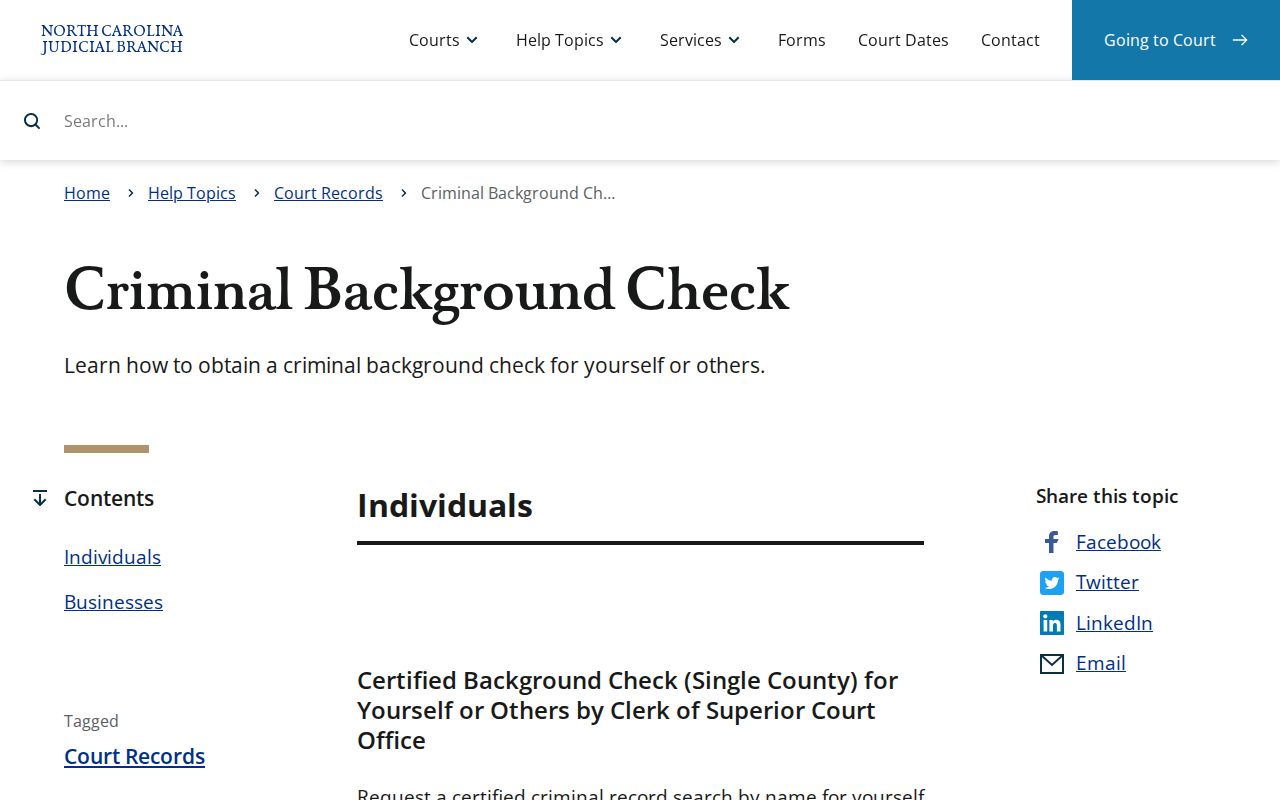
The comparison provides the official starting point before a reader chooses a paid certified search or a noncertified public search.
Beaufort County eCourts Search Fields
North Carolina completed statewide eCourts deployment in October 2025. The Portal can search public case information by party name or case number, with filters for location, case category, attorney, and dates when available. Choose Beaufort County and the criminal category for a local case. A case number is the strongest exact key. Name variants can help, but each match still needs review.
Portal detail may include the court, case type, filing date, parties, charges, events, status, disposition, judgment, and financial entries. Some document images require an account or are not public. Protected identifiers, juvenile records, sealed matters, and confidential case types do not appear. The clerk remains the source for certified copies and authoritative file questions.
| Portal field | Use | Beaufort search note |
|---|---|---|
| Smart Search | Party name or case number | Use variants, then verify the match |
| Location/County | Geographic filter | Select Beaufort County |
| Case category/type | Record category | Select Criminal where offered |
| Attorney | Attorney-linked cases | Optional narrowing field |
| Date range | Hearing or event window | Use when the interface exposes it |
| Case number | Exact case key | Strongest public identifier |
- Case number
- The court's unique key for a filed matter.
- Disposition
- The recorded outcome for a charge or case stage, not always a conviction.
- Judgment
- The court's final order on guilt, sentence, costs, or other terms.
- Hearing event
- A scheduled or completed court appearance, not proof of the final result.
Kinds of Criminal Records
A Beaufort County criminal history can be spread across several records created at different stages. The responding agency writes an incident or arrest report. Detention staff make a booking entry after a person enters custody. A magistrate records judicial process and release conditions. The clerk then maintains the filed criminal case. NCSBI links fingerprint-supported arrest cycles with dispositions reported by courts, while NCDAC publishes certain prison and supervision information.
Each record has a distinct purpose and custodian. Comparing them helps explain why alleged charges, court filings, and final outcomes may not match word for word.
- Incident and arrest reports describe an agency response, alleged offenses, and report details, subject to redaction.
- Booking records document jail intake, charges, bond or holds, and current custody information.
- Court case files track filed charges, hearings, pleas, dispositions, judgments, and financial entries.
- Fingerprint CHRI organizes reported arrest cycles and dispositions around a verified identity.
- Custody, supervision, and registry records are separate state or sheriff-maintained public systems with their own rules.
The NCDAC Criminal Offender Searches page is the official state corrections route for Beaufort County records after a transfer or sentence.
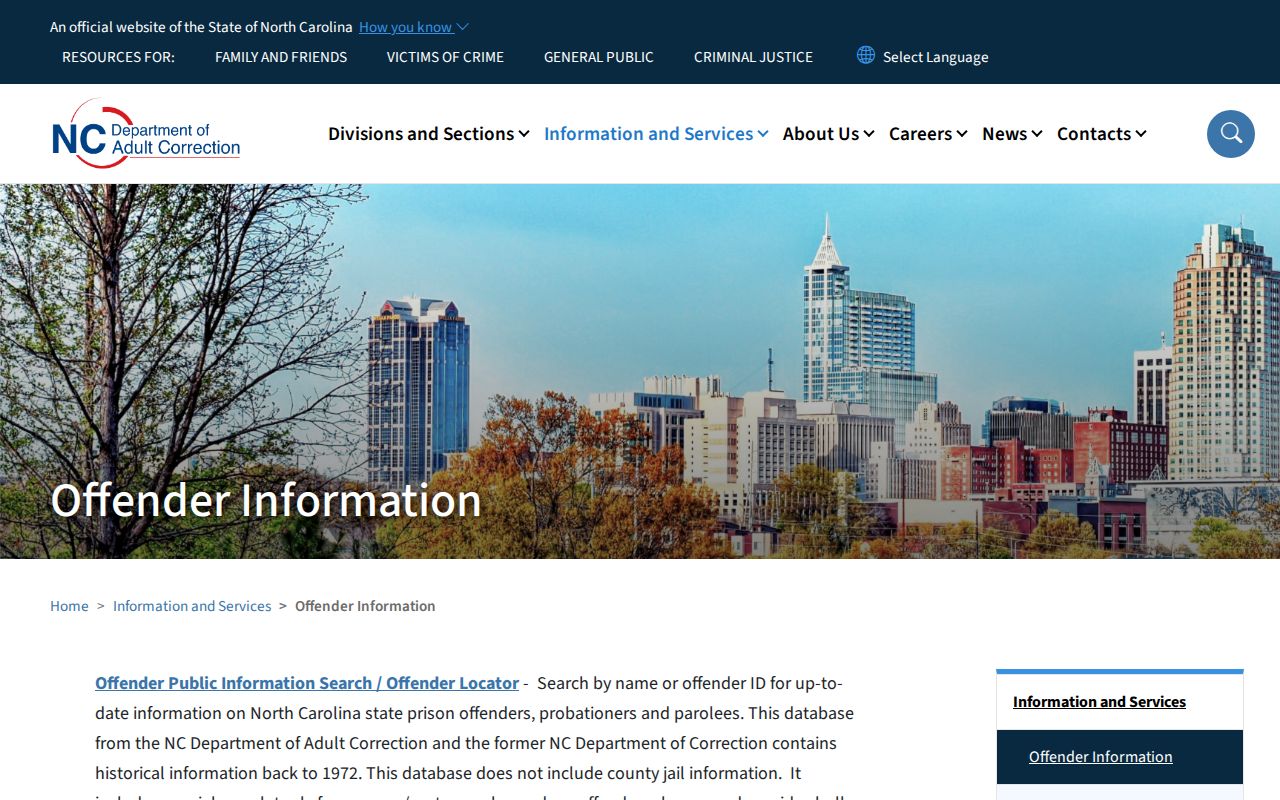
That state search belongs beside, not in place of, the sheriff's current county-custody channel.
Beaufort County Sheriff App Records
The official app is named Beaufort County Sheriff NC. The sheriff expressly labels Inmate Search, Bail Bonding, and local Sex Offender Data as app-only features. The app also advertises safety alerts, confidential tips, and service links. It does not advertise a confirmed warrant search, so it should not be treated as one.
A person without the app can call the sheriff's 24-hour line at 252-946-7111 and ask about public booking information. A very new intake may still be processing. A person may also have been cited, released, transferred, or held elsewhere. For a fuller booking sheet or public arrest information, send a narrow request to the sheriff. Investigative narratives and protected data can still be withheld or redacted.
The Beaufort County Sheriff's Office homepage provides the official app route and current agency contacts.
The sheriff's performance panel and app link place local record access beside the agency's current operational information.
Beaufort County Criminal Records: What They Contain
Contents vary by system. A Beaufort County court file can show case number, division, status, dates, parties, charge descriptions, events, disposition, judgment, and financial obligations. An agency report may include an OCA number, event times, location, involved officers, alleged charges, property, witnesses, and a narrative. A booking record adds intake and custody facts. NCSBI CHRI instead centers on fingerprint identity and reported arrest cycles.
| Name & Identifiers | Names and aliases, state or FBI identifiers where assigned, and fingerprint transaction controls in repository records. |
|---|---|
| Arrest / Booking Data | Arrest date and agency, intake status, alleged charges, and bond or hold information that is publicly releasable. |
| Charges & Statutes | Descriptions, statute references, offense dates, class, and later amendments when reported. |
| Disposition | Dismissal, not guilty, guilty plea or verdict, transfer, or another recorded case outcome. |
| Sentence | Judgment terms such as custody, probation, costs, restitution, and credit when public. |
| Custody / Supervision Status | County jail status, NCDAC confinement, release, or public supervision fields in the system that owns them. |
Medical screening, protected victim data, juvenile information, sealed material, and some identifiers are not public merely because a related event appears. An arrest or open charge does not prove guilt.
North Carolina Public Access Laws
North Carolina Public Records Law starts with broad access to government records, but criminal-history files have important limits. A Beaufort County requester should name the record, agency, OCA or case number, date range, and preferred format. The custodian provides existing records rather than creating a new explanation, and may redact protected content. Court files follow separate inspection rules, while body-camera recordings have their own statutory process.
Key Statutes:
G.S. 132-1 and 132-6 define public records and require inspection or copies at reasonable times as promptly as possible.
G.S. 132-1.4 protects criminal investigation material while identifying basic arrest and incident facts that remain public.
G.S. 132-1.4A places custodial law-enforcement recordings outside the ordinary report-request process.
G.S. 15A-151 keeps expunction records confidential except for limited authorized access.
Juvenile data, sealed matters, protected victim information, medical details, and active investigative content can remain unavailable. Public access to a basic event does not open every page in the investigative file.
Beaufort County Sheriff Report OCA
The OCA, or Originating Case Agency number, is the practical key for requesting a Beaufort County sheriff incident report. The sheriff says deputies place it on the back of the business card given after an incident. Enter that number on the official online request form. An OCA is not a court case number and should not be invented if the card is lost.
Without the OCA, contact the sheriff with the incident date, approximate time and location, parties, and deputy name. Administrative Services at 210 N. Market Street is the published records fallback because no separately named public Records Division is advertised. The front office is open weekdays from 8:00 a.m. to 5:00 p.m.; the main number, 252-946-7111, operates around the clock.
A narrow request gets a better response than a demand for an agency to research a person's full history. If Washington Police or Belhaven Police created the report, request the narrative from that city agency. The sheriff may hold only booking or assist information.
Beaufort County Fingerprints Reach NCSBI
Fingerprints connect a Beaufort County arrest to a stable identity. Detention staff photograph and fingerprint a person during covered booking events. NCSBI CIIS receives fingerprint cards from law-enforcement and prison systems, enters them in the Computerized Criminal History file, and indexes qualifying records to FBI files. Courts later report dispositions that NCSBI links to the arrest cycle.
That flow explains gaps. A disposition may not yet be reported or linked. An event may lack fingerprint support. An expunction order may still be moving through agency systems. For self-review, obtain the NCSBI Right to Review record, identify the precise cycle or field in dispute, and gather the Beaufort County clerk's certified disposition or expunction order. CIIS Customer Service can be reached at CIIShelp@ncsbi.gov or 919-582-8660.
Local fingerprint capture is available at the sheriff's Market Street office on Monday, Wednesday, and Friday from 8:30 to 11:30 a.m. It costs $10 cash, requires valid photo identification, and needs no appointment. The NCSBI repository description explains how submitted prints and court outcomes become criminal-history data.
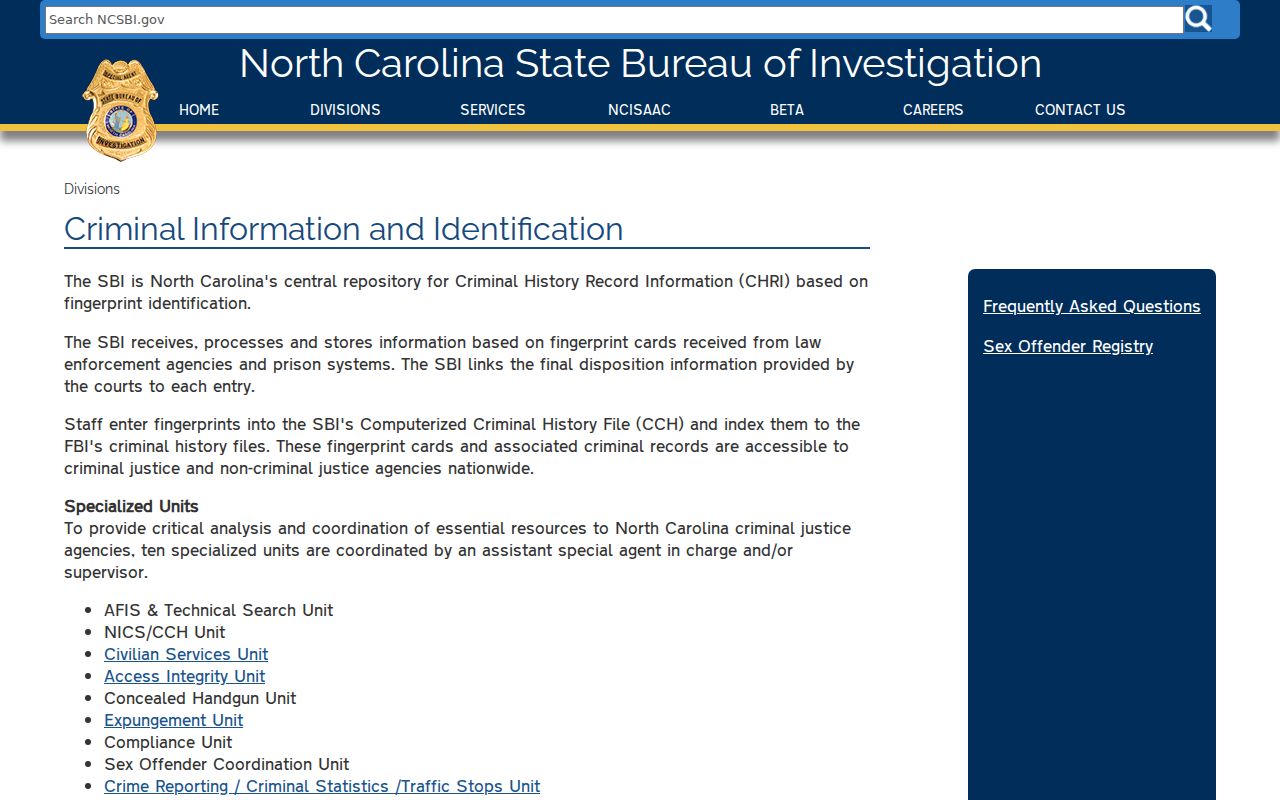
The repository view makes clear that a rap sheet is an identity record, not a copy of the clerk's pleadings or a deputy's incident narrative.
Restricted, Sealed & Expunged Records
North Carolina calls record-clearing relief an expunction. G.S. 15A-146 addresses dismissed charges and findings of not guilty. G.S. 15A-145.5 governs certain eligible nonviolent convictions and sets detailed exclusions and waiting periods. Under the current text, the filing fee for a petition under 15A-145.5 is $175 unless the petitioner is indigent. Other categories may have a different fee or none.
A Beaufort County case is filed for relief with the clerk when Beaufort is the county of the case or conviction. Petition materials may require affidavits, history and pending-case checks, details about other petitions, and proof that restitution is satisfied. Eligibility cannot be decided from a short record summary. Current statutes and forms control.
After an order, the clerk sends notice to affected agencies, but updates across court, law-enforcement, and repository systems may take time. Keep a certified copy of the order and later review the relevant records. Juvenile confidentiality and other sealed or restricted categories follow different rules.
Beaufort County Warrant Record Fallback
No official public Beaufort County warrant-search website was located. The safe fallback chain is direct: call the sheriff at 252-946-7111, call Beaufort County magistrates at 252-940-4019, check a related eCourts case, contact the issuing agency or court, or submit a narrow public-record request. The sheriff app advertises inmate and tip tools, not a confirmed warrant database.
A missing online result never proves there is no warrant. Unserved or sealed process may not appear, and an order for arrest can arise after a failure to appear or comply. Someone checking their own status should confirm name and case details through counsel, law enforcement, the magistrate, or the issuing court and ask how to address the process. Do not send money in response to an unsolicited warrant call.
Potentially public fields can include the named person, county and court, issue date, case or process number, charge or failure reason, bond condition, and service status. Exact public fields depend on the record and its status.
City-by-City Criminal Records in Beaufort County
Washington, Belhaven, and Aurora are the three largest incorporated places in Beaufort County by the 2020 Census. City location affects who created a police report, but criminal court cases still run through Beaufort County courts. Washington Police and Belhaven Police keep their own agency records. No current Aurora municipal police portal was confirmed, so the Beaufort County sheriff is the local fallback. Bookings route to county detention, and eCourts searches use the Beaufort County location rather than a municipal criminal court database.
Washington Record Check
9,875 · County-seat police, court, sheriff, and booking channels
Belhaven Record Check
1,410 · Belhaven Police reports route separately from county court files
Aurora Record Check
450 · Sheriff, county court, and state search fallbacks
Beaufort County Custody Records by System
Current local jail custody, state prison history, and federal incarceration are three different searches. The Beaufort County Sheriff NC app is the local inmate route, backed by the 24-hour jail phone. NCDAC Public Offender Search covers current or former state offenders and public supervision fields, not ordinary pretrial jail custody. VINELink can add custody notifications, but it is not a certified booking sheet and new events may lag.
Federal cases and custody sit outside the Beaufort County criminal record chain. The U.S. District Court for the Eastern District of North Carolina uses PACER for federal dockets. The Federal Bureau of Prisons locator covers federal inmates. FBI Identity History Summary requests are for a person's own fingerprint history, not a public search of federal prosecutions by county.
The Federal Bureau of Prisons Inmate Locator is the official source when a Beaufort County search points to federal custody.
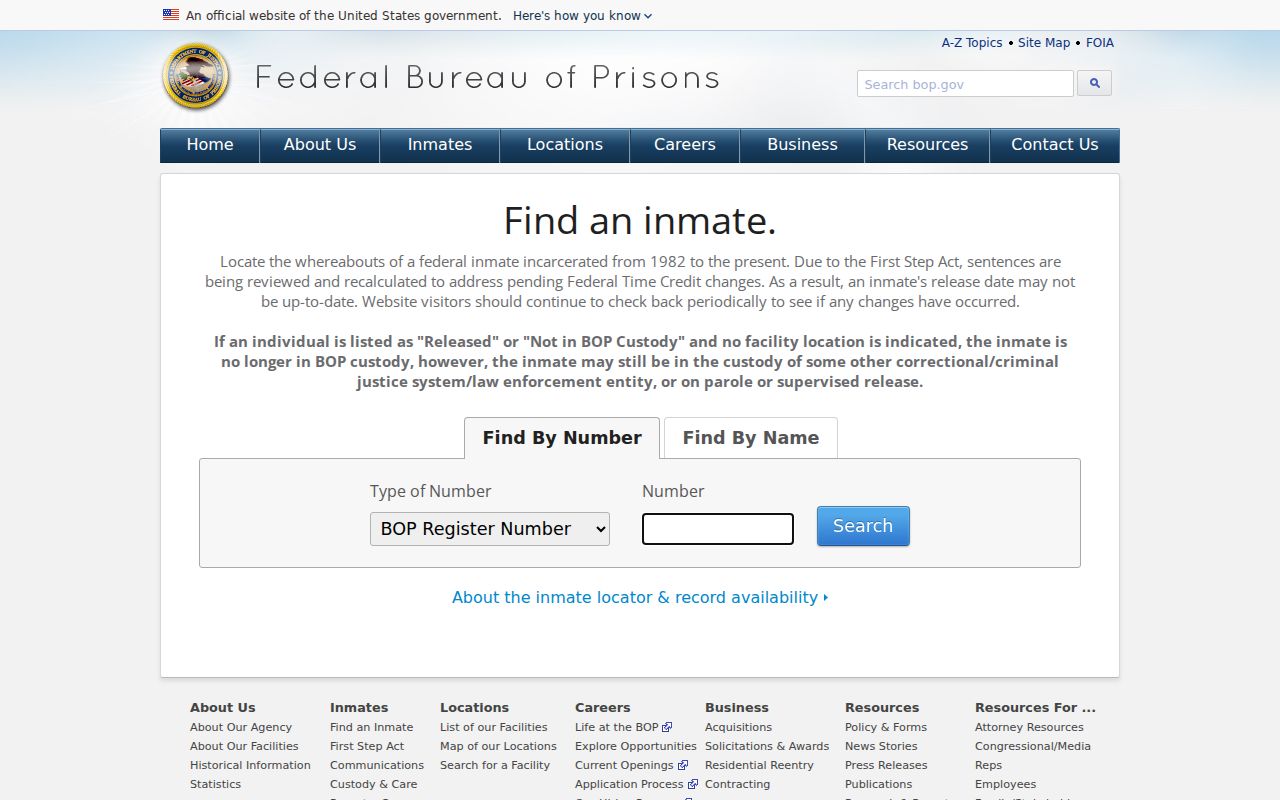
This separate federal tool prevents a county or state search from being stretched beyond the people and cases it actually covers.