
Beaufort County Sex Offender Checks
The North Carolina Sex Offender and Public Protection Registry is the main public search for Beaufort County. NCSBI maintains the statewide system from records entered by sheriffs in all 100 counties. Beaufort County Sheriff handles local registration and receives reports about suspected errors or noncompliance. Its Beaufort County Sheriff NC app also offers a local Sex Offender Data feature.
Choose the channel by the question. An address search supports neighborhood awareness. Name and registration-number searches help locate a known profile, while coordinates can cover a rural place that does not fit a street search well. NSOPW adds other states. No result proves that no risk exists because the public registry has legal and data limits.
Beaufort Registry Data Is App-Only
Local Sex Offender Data is among the tools that the sheriff places only in its mobile app. It is not a separate public browser database. Use the official sheriff site's Download App control to reach Beaufort County Sheriff NC. The statewide NCSBI portal remains available in a browser, so people without a compatible phone still have a full official search channel.
The sheriff's sex-offender page identifies the app-only feature.
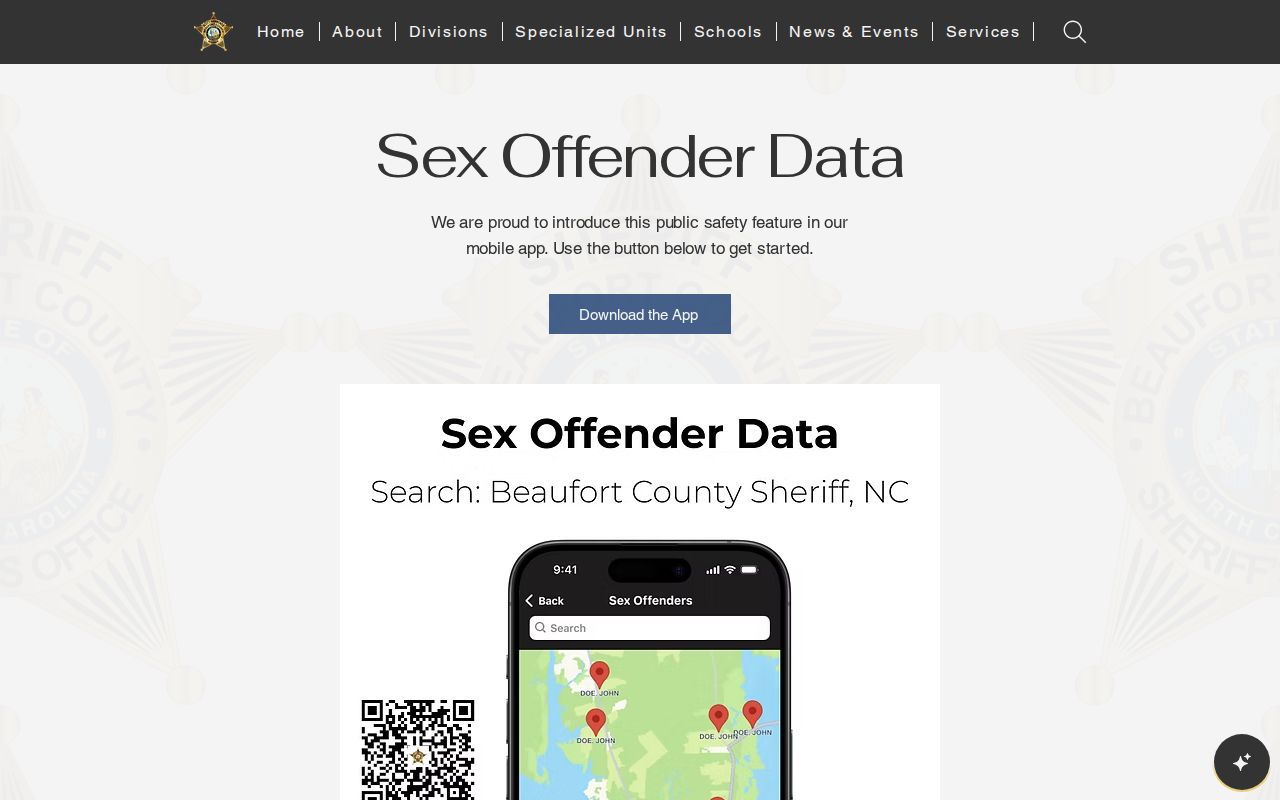
The local app adds a county service layer, but it does not replace NCSBI's statewide registry or its detailed search modes.
North Carolina Sex Offender and Public Protection Registry Searches
NCSBI offers several routes into Beaufort County registry records. Start with the most exact information available and change modes when the first query is too broad. A registration number is stronger than a common name. Address and coordinate searches answer a different question by showing a place-based result set.
- Open the official North Carolina registry and read the search terms and limits.
- Select a mode: offenders near an address, name with city or ZIP, latitude and longitude, or Sex Registration Number.
- Enter only known facts. Avoid guessing a radius option or identity detail.
- Review results for status, reported location, offense facts, and identifiers, while remembering that names and birth dates are not unique.
- Sign up for email alerts if ongoing proximity notices are useful for community awareness.
| Field or control | Type | Required | Use |
|---|---|---|---|
| Offenders nearby your address | Search mode | One mode | Proximity and map results |
| Address, city, ZIP | Text | Mode-dependent | Valid location for nearby search |
| Radius | Dropdown | Mode-dependent | Use only the live options shown |
| First and last name | Text | Mode-dependent | Search variants; not positive identification |
| Latitude and longitude | Numeric | Mode-dependent | Coordinate-based geography |
| Sex Registration Number | Text | Mode-dependent | Strong registry identifier |
| Email alerts | Signup | No | Proximity notifications |
The official registry search interface shows these modes.
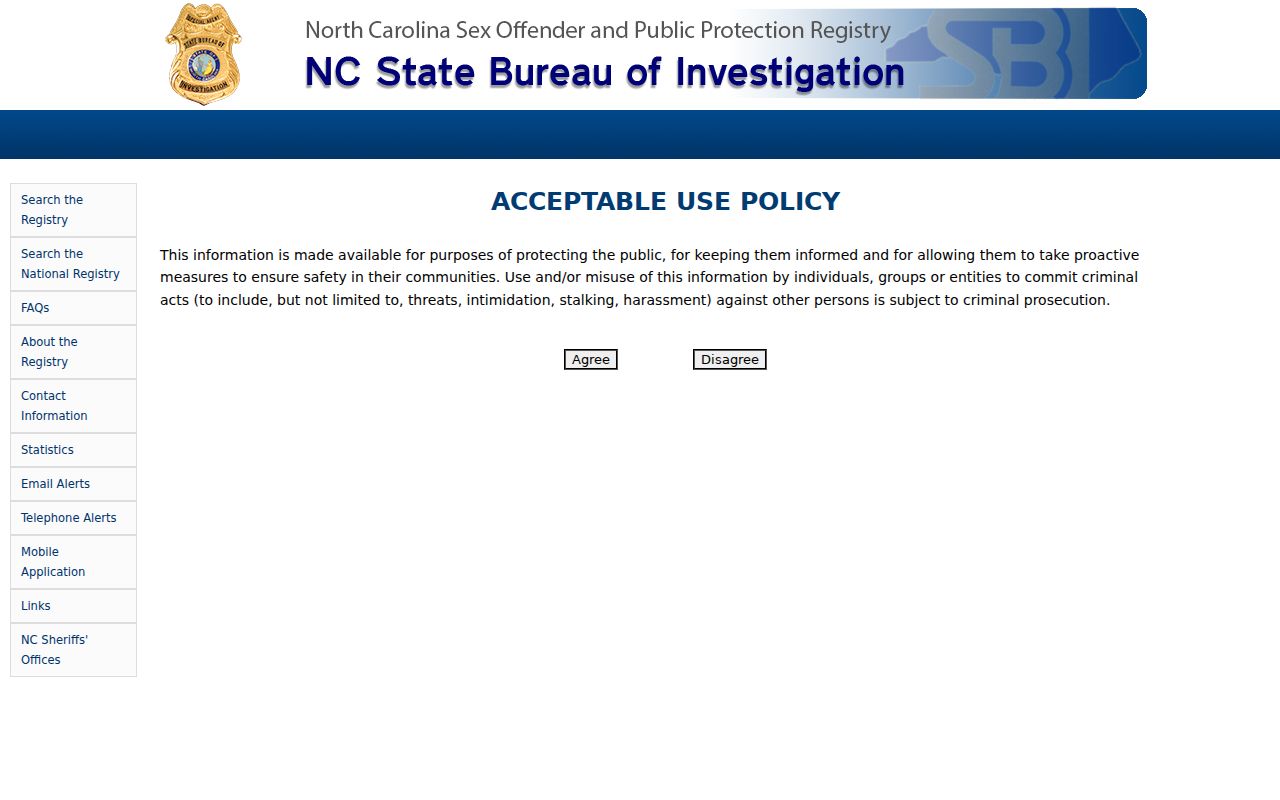
The interface supports both identity and geographic questions without exposing a private subject in the illustration.
Beaufort Registry Name Limits
NCSBI states that only fingerprints positively identify a person. A similar name or date of birth is not enough. Read aliases, physical description, registration number, reported county, and other authorized identifiers together before drawing any conclusion. Never assume that a same-name result belongs to the person you had in mind.
The public registry also omits whole categories. Juvenile adjudications do not appear on the public Internet registry. Conduct that was never detected is absent, and not every offense requires registration. Some displayed facts are self-reported and may change before the system updates. Those limits make the registry a focused safety resource, not a full criminal-history file.
When details conflict, note the profile's current status and verification information, then contact the Beaufort County Sheriff. A screenshot or copied result should never outrank a correction from the office that maintains the source entry. The same care applies when a record seems to vanish after a new search, since search choices and update timing can change the result set.
Registry Profiles: What They Show
A Beaufort County registry profile can combine identifying, location, offense, and compliance facts. Fields vary by record, and the public view does not expose every item held by law enforcement. The profile should be read as a dated report from the registration system. A move, vehicle change, or verification event may not be instant.
| Registry number | The system identifier used for a precise search. |
|---|---|
| Name and aliases | Reported identity labels that still require careful matching. |
| Photo and description | Authorized image and physical traits used with other identifiers. |
| Reported address | The submitted location and county, subject to update timing. |
| Offense and conviction | The qualifying offense information tied to registration. |
| Status and verification | Public compliance or verification facts when the record provides them. |
| Other record fields | May include marks, tattoos, vehicles, work or school facts where authorized. |
Beaufort Registry Count Has Caveats
At the August 1, 2026 research inspection, NCSBI's statistics page displayed 116 Beaufort County offenders. The same official source calls the figure approximate, notes possible delays and errors, and excludes pending status. It is a snapshot of registry administration, not a measure of current offending, neighborhood risk, or any city's rate.
The official registry statistics interface supplies the county count and its limits.
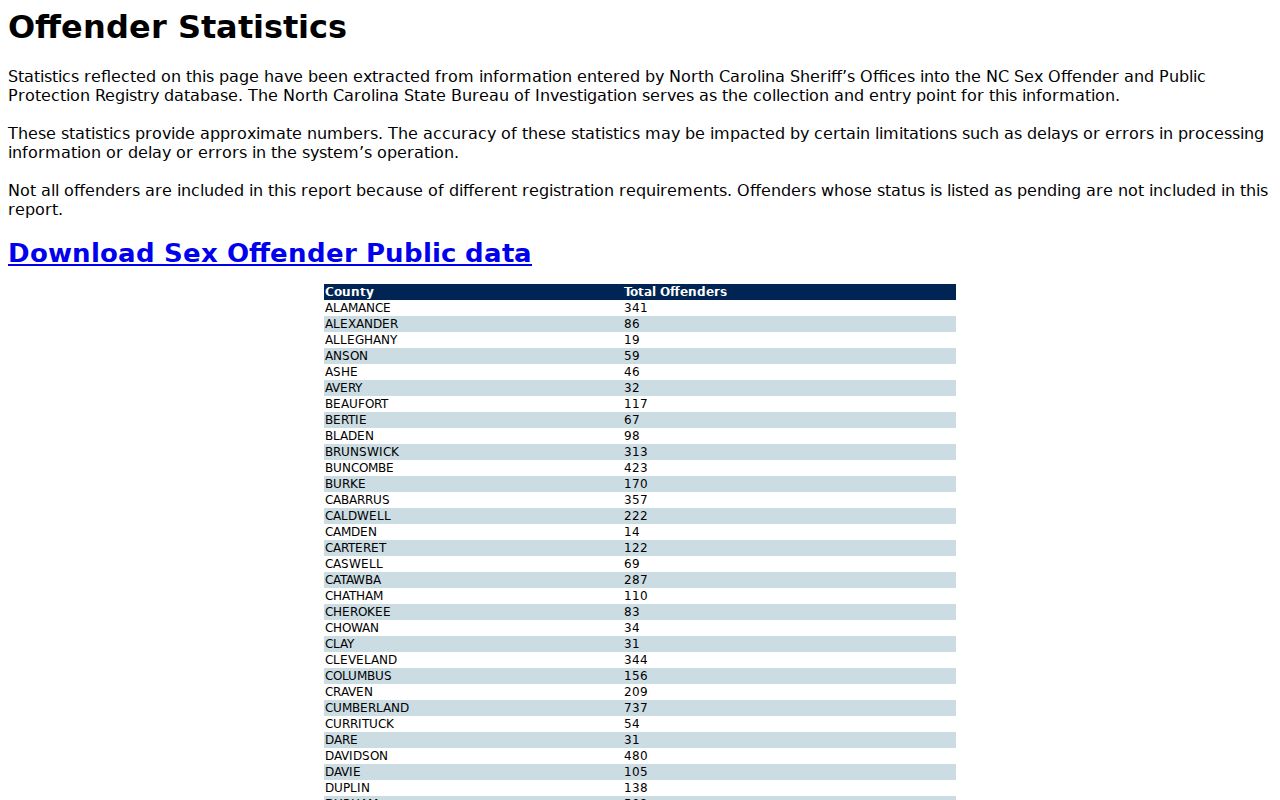
Use a live address search for local awareness instead of dividing the county snapshot into unsupported city or neighborhood estimates.
Registration Levels and Duties in North Carolina
North Carolina should not be described as a simple public Tier I, II, and III system. Article 27A sets a standard statewide program and stricter lifetime categories, including recidivist, aggravated-offense, and sexually violent predator classifications. The precise conviction and current statute control. Registration and verification are handled by sheriffs, but the exact schedule depends on the legal category.
| North Carolina category | General duration | Public-use caution |
|---|---|---|
| Standard statewide program | Generally 30 years | An eligible petition after 10 years requires a court order and findings. |
| Recidivist, aggravated, SVP, and other lifetime categories | Lifetime | The exact statute and conviction determine the duty. |
| Juvenile adjudication | Not shown on the public Internet registry | Confidential juvenile rules differ from adult registration. |
Ten years is not automatic removal. Under North Carolina General Statutes Article 27A, an eligible person must petition and obtain the required findings. Lifetime statutory categories remain lifetime.
Three Beaufort Registry Search Layers
The NCSBI portal, sheriff app, and National Sex Offender Public Website overlap but serve different scopes. NCSBI is the controlling North Carolina public registry. Beaufort County Sheriff NC adds local mobile access. NSOPW searches participating jurisdictions across state lines, which matters when community awareness is not confined to one county.
The U.S. Department of Justice NSOPW search is the official cross-state layer.
NSOPW broadens geography, but it does not replace the originating registry when a profile needs correction or closer interpretation.
Report Beaufort Registry Errors
If Beaufort County registry information appears wrong or someone may not be complying, gather the profile link or registration number, the observed fact, date, and location. Call Beaufort County Sheriff at 252-946-7111. Do not confront the person, track them, or publish personal details. The sheriff can compare the report with nonpublic registration records and take the proper official step.
Failure to register, report required changes, return verification, or provide truthful registration data can be criminal conduct under Article 27A. A member of the public should report facts, not decide that a violation has occurred. VINELink is a custody tool and does not replace registry reporting.
Note: A delayed location update may require sheriff review, while a profile correction must come from the official record custodian.
Beaufort Address-Proximity Alerts
The NCSBI registry includes email alert signup for proximity notices. Use an address tied to the area of concern and follow the current interface prompts. Alerts can help residents revisit official information when the system reports a change near that point. They do not predict conduct or replace ordinary safety planning.
Because Beaufort County includes rural and coastal areas, the coordinate mode can also help when a place is hard to express as a standard street address. Enter known coordinates and accept only the live radius choices. Do not invent a distance or infer that a county total describes the immediate area.
Using Registry Information Lawfully
Registry access supports personal, family, and community awareness. Read the status and update date, use official alerts, and report a concrete concern to law enforcement. The registry is not an invitation to contact, threaten, follow, shame, or punish anyone. Public access does not transfer enforcement power to a searcher.
The NCSBI registry FAQ states the official warnings and data limits.
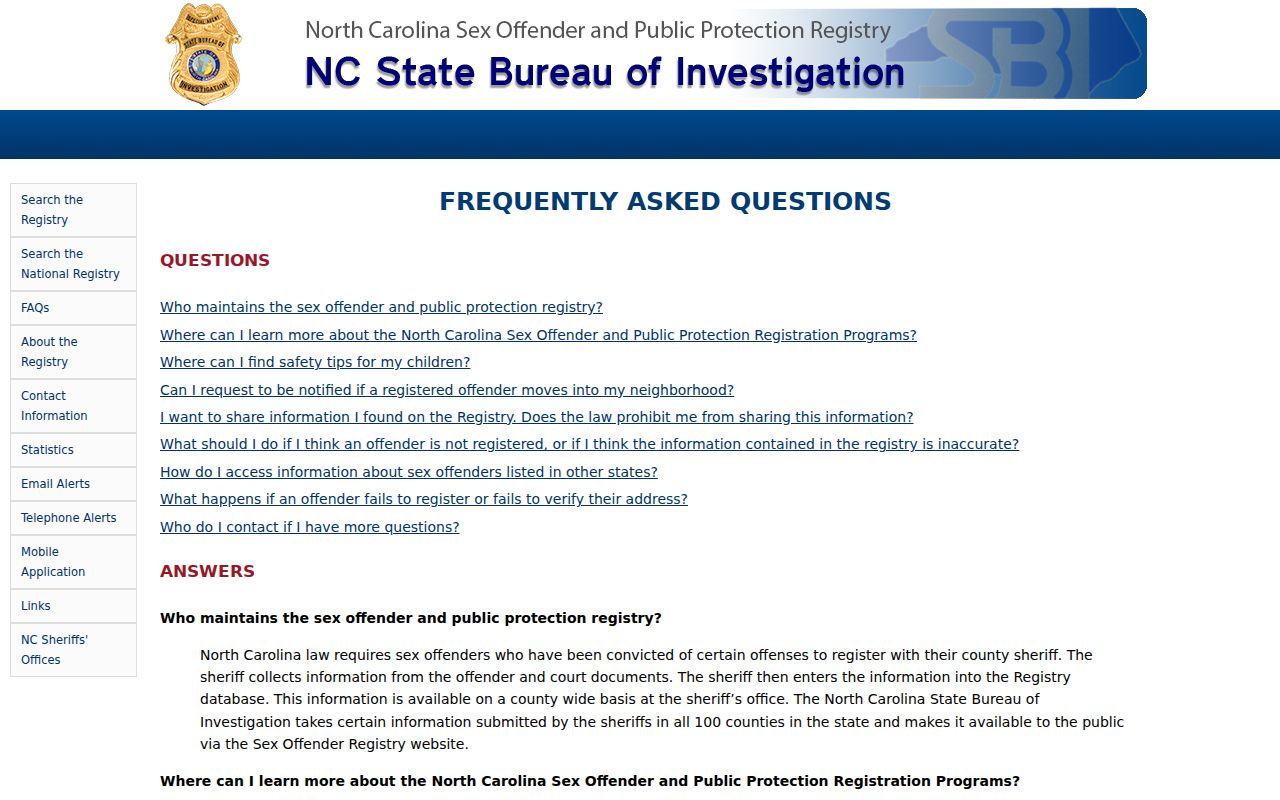
The warning belongs beside the results because misuse can cause harm and may lead to prosecution.
Registry misuse warning: The NCSBI registry warning states that threats, intimidation, stalking, harassment, or other criminal misuse can be prosecuted under North Carolina law. Report suspected noncompliance to Beaufort County Sheriff at 252-946-7111 and do not confront or surveil a registrant.